
★★★★★ 5.0 · 116+ verified reviewsBS5837 tree survey specialists020 4531 6444 · admin@arbor-cultural.co.uk
Surrey planning support★★★★★ 116+ verified reviews
Planning submission and pre-start compliance

Tree Protection Plan Surrey

A site drawing showing exactly where retained trees are protected and where construction activity is restricted.

Tree Protection Plan for Surrey planning and development
What this document is for

Tree Protection Plan for Surrey projects

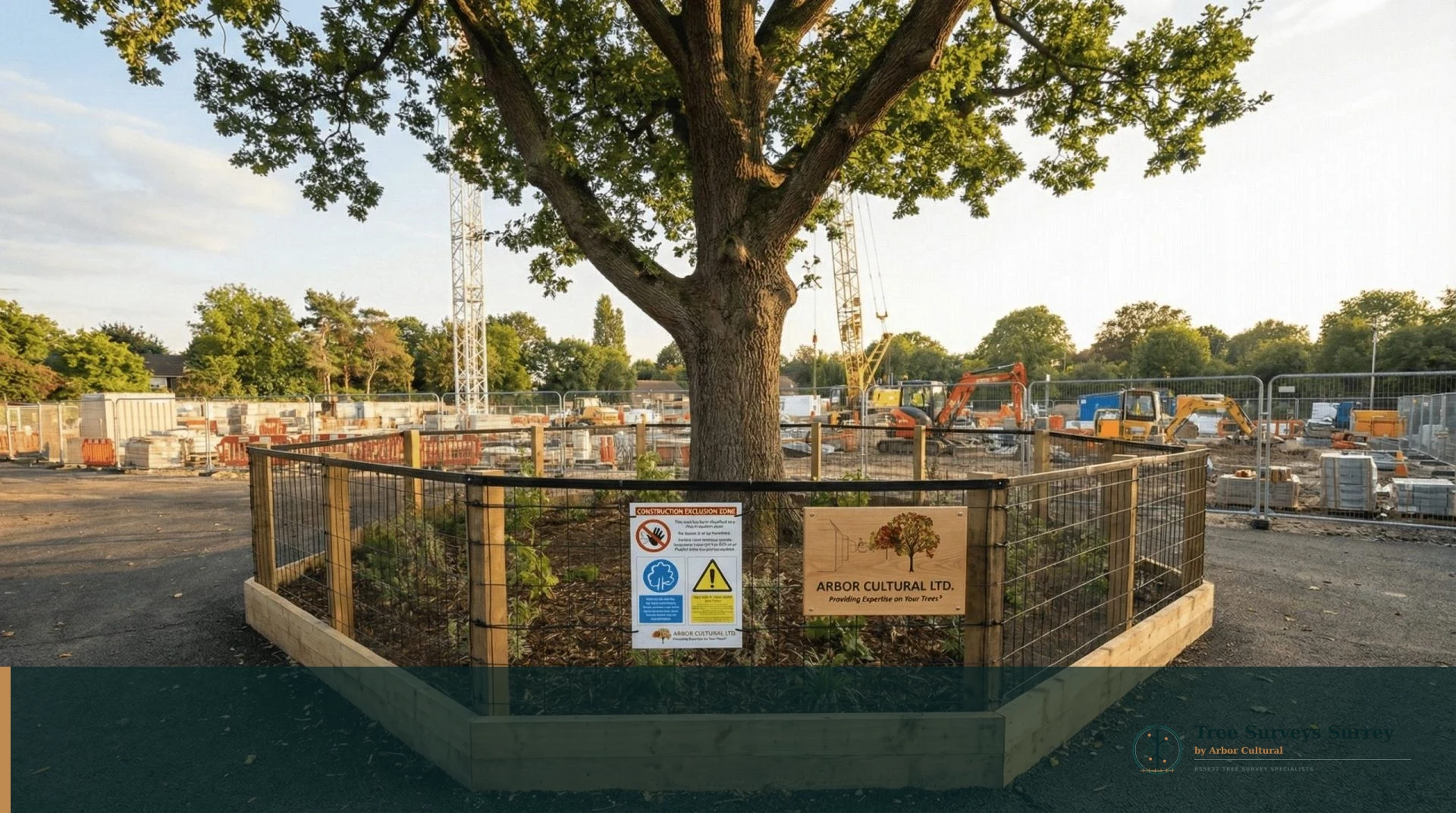
A Tree Protection Plan is the drawing that makes the approved tree strategy visible on site. It shows protective fencing, construction exclusion areas, ground protection and any controlled working zones that contractors need to recognise before demolition or construction begins.

The plan needs to match the real site arrangement. Access, compounds, temporary storage, demolition routes and the sequence of works can all affect where protection can be installed and maintained. A clear TPP avoids the common problem of a technically correct line on a drawing that cannot actually be implemented.

Where a planning condition requests a TPP, send the condition, approved layout and any existing AMS. The drawing and written method should tell the same story.

What you receive

The exact output is matched to the project, but the core deliverables normally include the items below. If the council has supplied its own wording, that request is reviewed first so the proposal is built around the live requirement.

  • Scaled tree protection drawing
  • Protective fencing locations
  • Construction Exclusion Zones
  • Ground protection where required
  • Controlled working and no-dig annotations
  • Links to AMS and supervision requirements
Technical detail

What makes the work useful to planning and design teams.

The aim is not to produce a long report for its own sake. The information should answer the project question clearly and remain consistent with the drawings being used.

01

Protection before site activity

Tree protection is most effective when it is installed before the site becomes busy. The plan should make the pre-start sequence clear.

02

Ground protection where access is accepted

If controlled access is part of the approved strategy, the TPP can define where specialist ground protection is needed.

03

Clear site communication

Tree references, legends and working zones should be easy for the site team to understand during inductions and inspections.

04

Consistency with conditions

The TPP should reflect the planning condition, approved drawings and AMS rather than becoming a separate version of the project.

Before the document is issued

Quality control that keeps the information usable.

A Tree Protection Plan should be readable at site scale. Before issue, we check that fencing, ground protection, working restrictions and any special construction zones are shown clearly enough for the project team to set them out. The plan should support the AMS rather than introducing a second, conflicting protection strategy.

The TPP also needs to reflect the practical site. Gates, access routes, demolition areas, compounds and proposed work zones can all matter. Where those elements are shown on current drawings, the protection plan can be coordinated around the way the project is actually intended to run.

Finally, the document should make the next decision obvious. If another BS5837 stage is needed, it should be clear why and when. If the current document completes the immediate requirement, the client should not be pushed into commissioning extra work simply because it exists on a service list.

Where it fits in the BS5837 sequence

Survey first. Then use the next document only when the project is ready for it.

Most development projects near trees follow a recognisable sequence: establish the tree resource, map the constraints, assess the actual proposal, then set out the protection and construction methods needed to deliver it. Not every small project needs every document, and not every document should be commissioned at the same time.

If you are still designing, early survey and constraints information may be the most valuable spend. If you already have a stable layout, the impact assessment becomes more relevant. If planning permission is in place, the focus often moves to AMS, TPP and supervision. The quote should reflect the stage you are actually at.

  1. 01SurveyRecord the trees and establish the evidence base.
  2. 02ConstraintsMap crowns and RPAs for design.
  3. 03AssessmentTest the live proposal against the tree resource.
  4. 04Construction detailSet out protection, methods and supervision.
Common project situations

When clients normally ask for Tree Protection Plan.

If your situation is not listed, send the actual request. The site and planning stage are more important than matching a generic example.

01

Council asks for fencing and protection details

02

Site access runs close to retained trees

03

Construction compound needs to be coordinated around RPAs

04

Condition discharge requires a scaled protection drawing

Information that speeds up the quote

Show us the project as it exists today.

Send the site address, current architectural drawing, topographical survey if available, and the exact wording from the council, tree officer, Building Control or project consultant. Include any earlier tree survey or report too. Existing information may still be useful and should be checked before repeat work is recommended.

If there is a submission date, condition-discharge deadline or construction start date, include that at the beginning. Programme can affect what needs to happen first.

Questions

Tree Protection Plan FAQs

These are general planning answers. Your council condition or validation request may be more specific.

Does every BS5837 survey need a TPP?

No. It is usually needed where retained trees require construction-stage protection or the planning authority asks for it.

What is a Construction Exclusion Zone?

It is an area protected from normal construction activity to safeguard retained trees and their rooting environment.

Can the plan show ground protection?

Yes. Where controlled access is accepted, the location and extent can be shown and linked to the AMS specification.

Should the contractor have a copy?

Yes. The site team should work from the approved plan before and during construction.

Can the TPP be updated?

If the construction arrangement changes materially, the arboricultural implications should be reviewed before the protection layout is changed.

Tree Protection Plan · Surrey

Send the plans. We will confirm the right scope.

Get a clear fixed-fee proposal before you instruct.